Ion-Exchange Resin in Residential Water Softening
Reference information on regeneration cycles, hardness grain settings, and brine tank maintenance for households across Canada.
Key Topics
How Ion-Exchange Technology Works at Home
Residential water softeners in Canada rely on ion-exchange resin to remove calcium and magnesium ions responsible for water hardness. Understanding how the resin functions, when it needs regeneration, and how to maintain the brine tank helps extend equipment life and keeps treated water within expected quality ranges.
Ion-Exchange Process
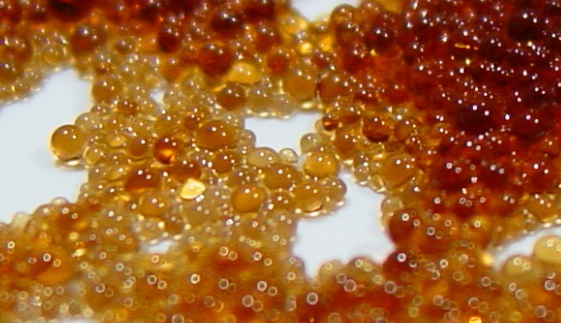
Sulfonated polystyrene resin beads carry sodium ions that swap places with calcium and magnesium as hard water passes through the resin bed. The exchange occurs at the bead surface and continues until exchange sites become saturated.
Regeneration Cycles
Once resin capacity is exhausted, a brine solution flushes the beads, displacing hardness ions and recharging exchange sites with sodium. Cycle frequency depends on household water use and local hardness levels.
Brine Tank Upkeep
The brine tank holds sodium chloride or potassium chloride used during regeneration. Regular checks for salt bridges, mushing, and correct water levels prevent incomplete regeneration and resin damage.
Articles
In-Depth Guides
How Ion-Exchange Resin Works in Water Softeners
A detailed look at sulfonated polystyrene beads, cation exchange capacity, and what happens inside the resin tank during a softening cycle.

Water Softener Regeneration Cycle: A Practical Guide
Step-by-step breakdown of brine draw, slow rinse, backwash, and refill phases — and how to set cycle timing for Canadian water hardness ranges.

Brine Tank Maintenance and Hardness Grain Settings
How to inspect the brine tank, identify salt bridges, set hardness grains per gallon, and adjust iron compensation on Canadian softener controllers.
Water Hardness in Canada
Why Hardness Levels Vary by Region
Canadian provinces draw water from different geological sources. Areas with limestone and dolomite geology — common in Ontario, Alberta, and parts of Quebec — tend to produce harder groundwater. Surface water from Canadian Shield regions is often softer by comparison.
Water hardness is measured in grains per US gallon (gpg) or milligrams of calcium carbonate per litre (mg/L as CaCO₃). Health Canada does not set a health-based guideline for hardness, but levels above 200 mg/L are associated with scale buildup in plumbing and appliances.

Ion exchange process — Wikimedia Commons / Public domain
Quick Reference
Hardness Classification Table
| Classification | mg/L as CaCO₃ | Grains per Gallon (gpg) |
|---|---|---|
| Soft | 0 – 60 | 0 – 3.5 |
| Moderately hard | 61 – 120 | 3.6 – 7.0 |
| Hard | 121 – 180 | 7.1 – 10.5 |
| Very hard | > 180 | > 10.5 |
Classification based on Health Canada and WHO drinking water quality guidelines.
Contact
Send a Request
Your request has been submitted.